01
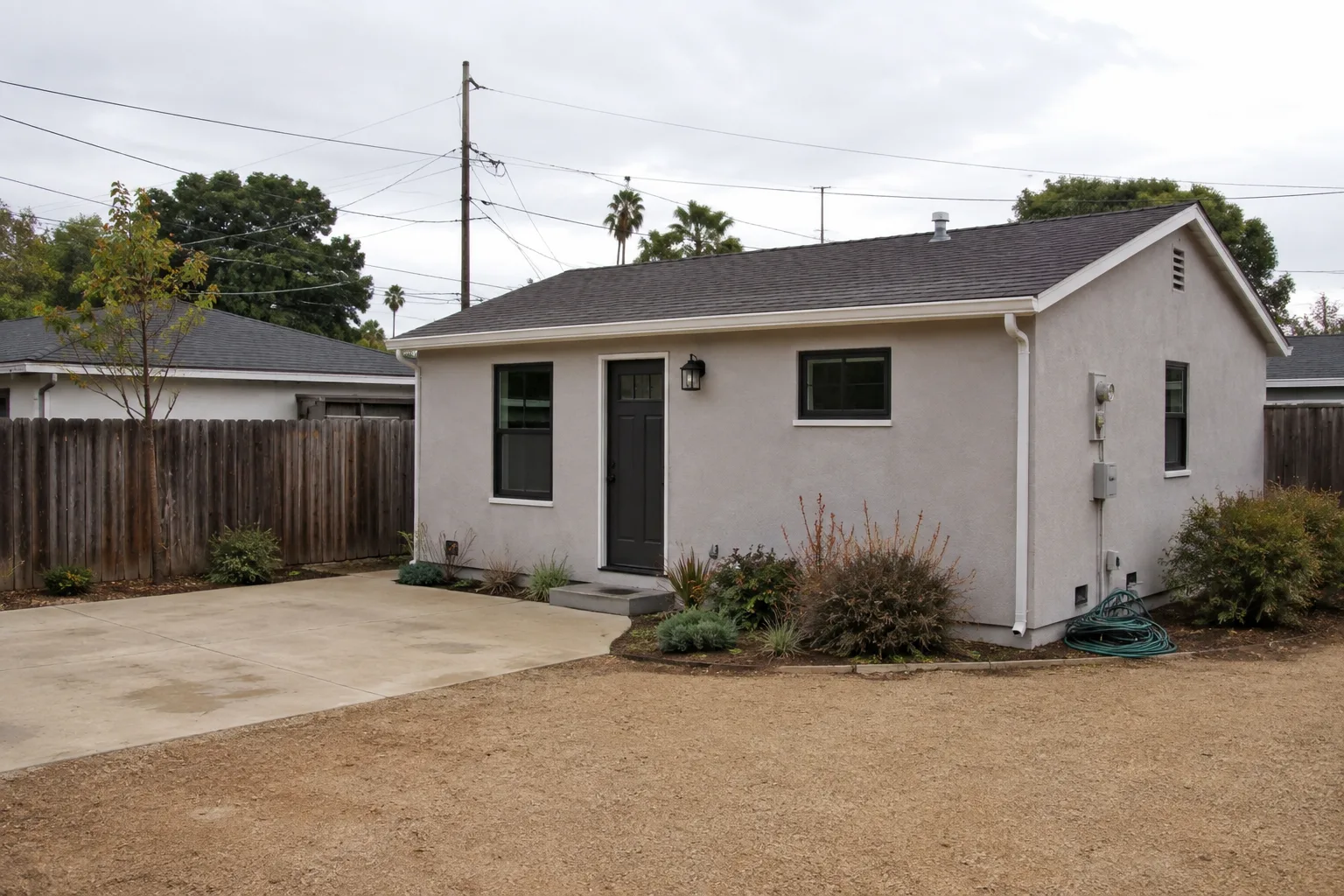
Detached backyard ADU
A separate home with the clearest independence—and the most site-planning questions. Start with access, utilities, setbacks, open space, and the relationship to the main house.
Local residential construction team · Anaheim, California
We help Anaheim homeowners turn a backyard, garage, or underused part of the house into a practical ADU scope—grounded in the City’s review paths and shaped for construction from day one.
10+ yearsresidential construction experience
Who we help
Anaheim homeowners considering a detached ADU, attached addition, garage conversion, or JADU.
What we do
Feasibility framing, scope development, pre-submittal coordination, and construction planning.
Choose the right starting point
The best Anaheim ADU route depends on what exists today, what the lot can support, and how the new space needs to function. Selecting a type is the start of due diligence—not the end of it.
01
A separate home with the clearest independence—and the most site-planning questions. Start with access, utilities, setbacks, open space, and the relationship to the main house.
02
New living area joined to the primary home. Existing structure, roof tie-ins, privacy, and utility routing shape the scope before the floor plan is finalized.
03
An existing shell can reduce ground-up work, but it still needs a real review of slab, ceiling height, waterproofing, fire separation, utilities, and legal parking conditions.
04
A compact unit created within the home’s existing space. JADUs follow a distinct path, including owner-occupancy and recorded covenant considerations that should be understood early.
Anaheim-specific review paths
Anaheim offers more than one route, but the fastest-looking option is only useful when the property and proposal actually qualify.
Open the City’s ADU hub ↗Path A · Custom
For a site-specific design or a proposal that does not use an expedited path. The package must respond to both the building design and the property conditions.
Read the official submittal checklist ↗Path B · Catalogue
Catalogue plans can reduce building-plan design work. They do not pre-approve the lot: placement, utilities, access, site plan, and current City requirements still matter.
View the City catalogue ↗Path C · Eligible projects
An expedited process for projects meeting Anaheim’s current eligibility criteria. Verify the latest qualifications before organizing a submission around this route.
Check ADU Express eligibility ↗A compact project path
A three-step sequence keeps early decisions connected. The output is not a permit promise; it is a more disciplined basis for design, proposals, and City conversations.
Map the existing structures, access, grade, utilities, likely setbacks, easements, and operational needs.
Compare standard review, a pre-approved catalogue design, and ADU Express against the actual site and program.
Align drawings, utility assumptions, finishes, exclusions, and proposal milestones before committing to construction.
Anaheim before-submittal check
Confirm applicability and current instructions directly with the City and serving utilities. The official checklist controls—not this summary.
Identify the required verification and the proposed point of connection before treating a utility route as settled.
Coordinate the location and service approach early enough to reflect clearances and routing in the site plan.
Plan for the City’s addressing step and keep the assigned address consistent across the submittal documents.
If a JADU is proposed, understand the recorded covenant and owner-occupancy implications before selecting that project type.
Primary-source checkpoint
Anaheim ADU Submittal Requirements Checklist ↗Anaheim ADU Frequently Asked Questions ↗“A useful proposal makes unknowns visible before they become change orders.”
Scope and proposal guidance
An early ADU proposal should separate confirmed scope from allowances and unresolved conditions. Look for clarity on plan coordination, utility work, site access, finish level, owner selections, agency fees, and exclusions.
Practical questions
Rules and processes change. These answers were reviewed September 5, 2026 and should be checked against the current City pages and California HCD guidance.
Read the California HCD ADU Handbook ↗No. The City’s catalogue can streamline review of the building design, but your lot, placement, utilities, fire access, and other site conditions still require project-specific review. Confirm current catalogue and submittal rules with Anaheim staff.
Anaheim describes ADU Express as an expedited pathway for eligible projects. Eligibility is not automatic. The project must fit the City’s current criteria and still needs the required documents and reviews.
Usually, no. Sewer route and capacity, electrical service, water, access, and site constraints can materially change a promising layout. A coordinated feasibility pass gives the design a more dependable starting point.
No. Permit timing and construction cost depend on property facts, selected scope, plan completeness, agency review, and market conditions. A responsible proposal identifies assumptions and exclusions instead of presenting a generic online number as a guarantee.
Your next useful step
Record the property address, intended project type, approximate target size, how the space will be used, known utility conditions, and your most important constraint. That brief becomes the starting point for a focused feasibility and scope conversation.
Build your project briefThe planner saves only in this browser and does not submit your information.